


Semi-Precious
A commercial label for every gemstone outside diamond, ruby, sapphire and emerald. Not a measure of quality.
The precious and semi-precious split is a nineteenth-century marketing convention with no gemmological basis.
A fine tourmaline, spinel or tsavorite can be worth more per carat than a mediocre ruby, despite the label.
In pearl jewellery, semi-precious beads such as turquoise, onyx, garnet and lapis are used as spacers and colour accents between pearl rows.
When you are buying
Judge a coloured stone on colour, clarity and cut rather than on which side of this label it falls. The word says more about Victorian trade than about the stone in front of you.
Pearls with other stones
15 pieces in the collection right now, from ₹1,600.
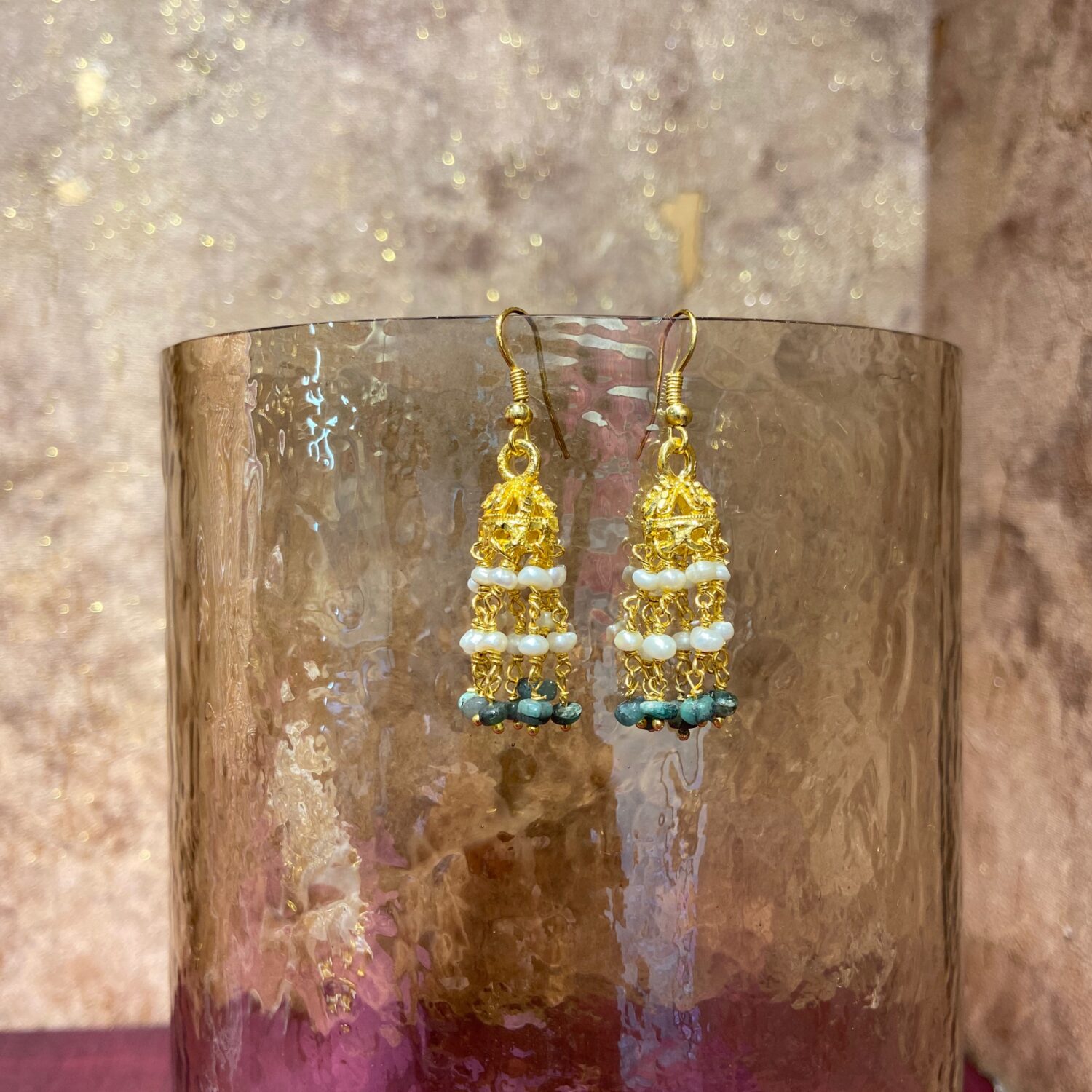
Attractive Hook Jhumkas Featuring White Seed Pearls & SP Emeralds
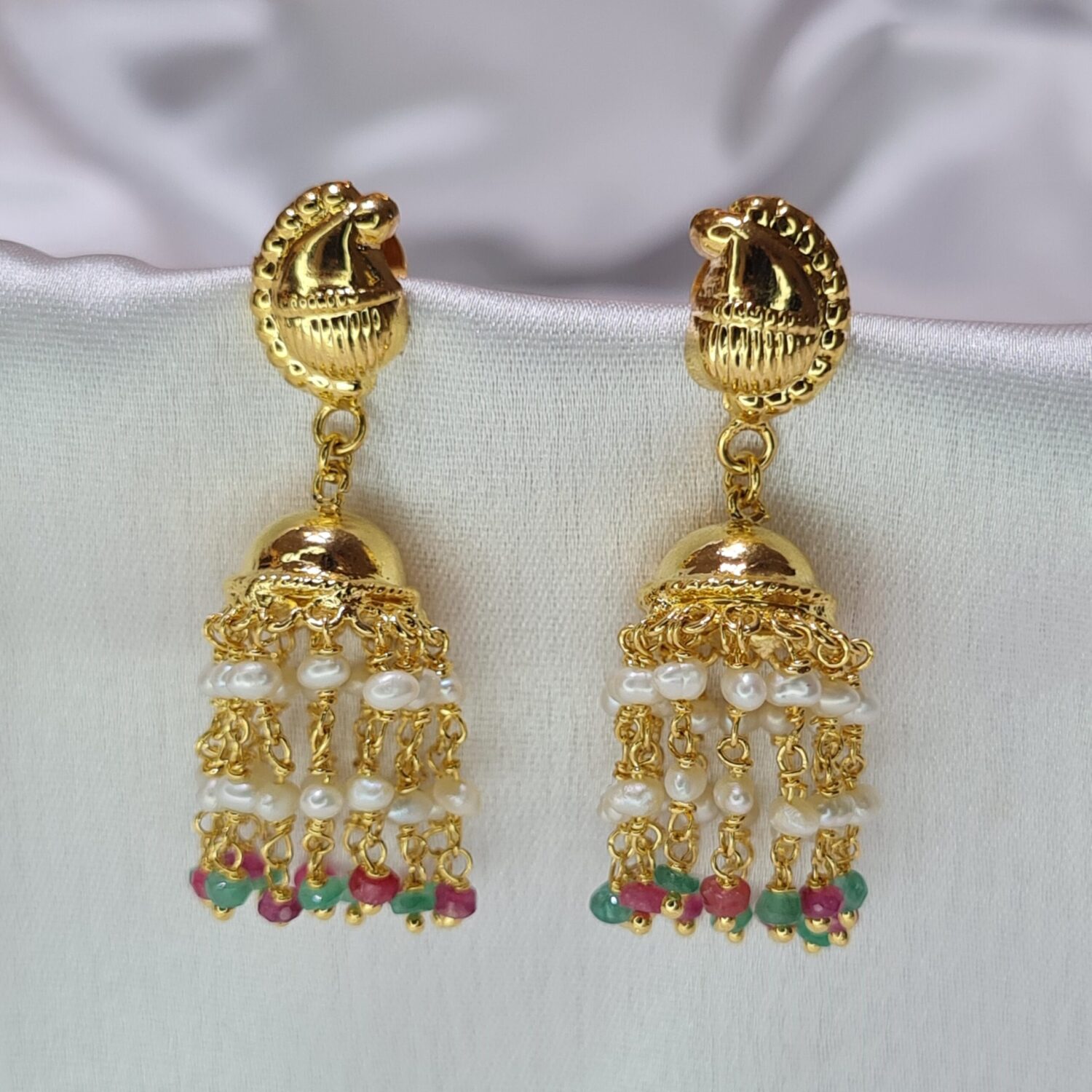
Opulent Paisley Studded White Seed Pearl Jhumkas Featuring Emeralds & Rubies
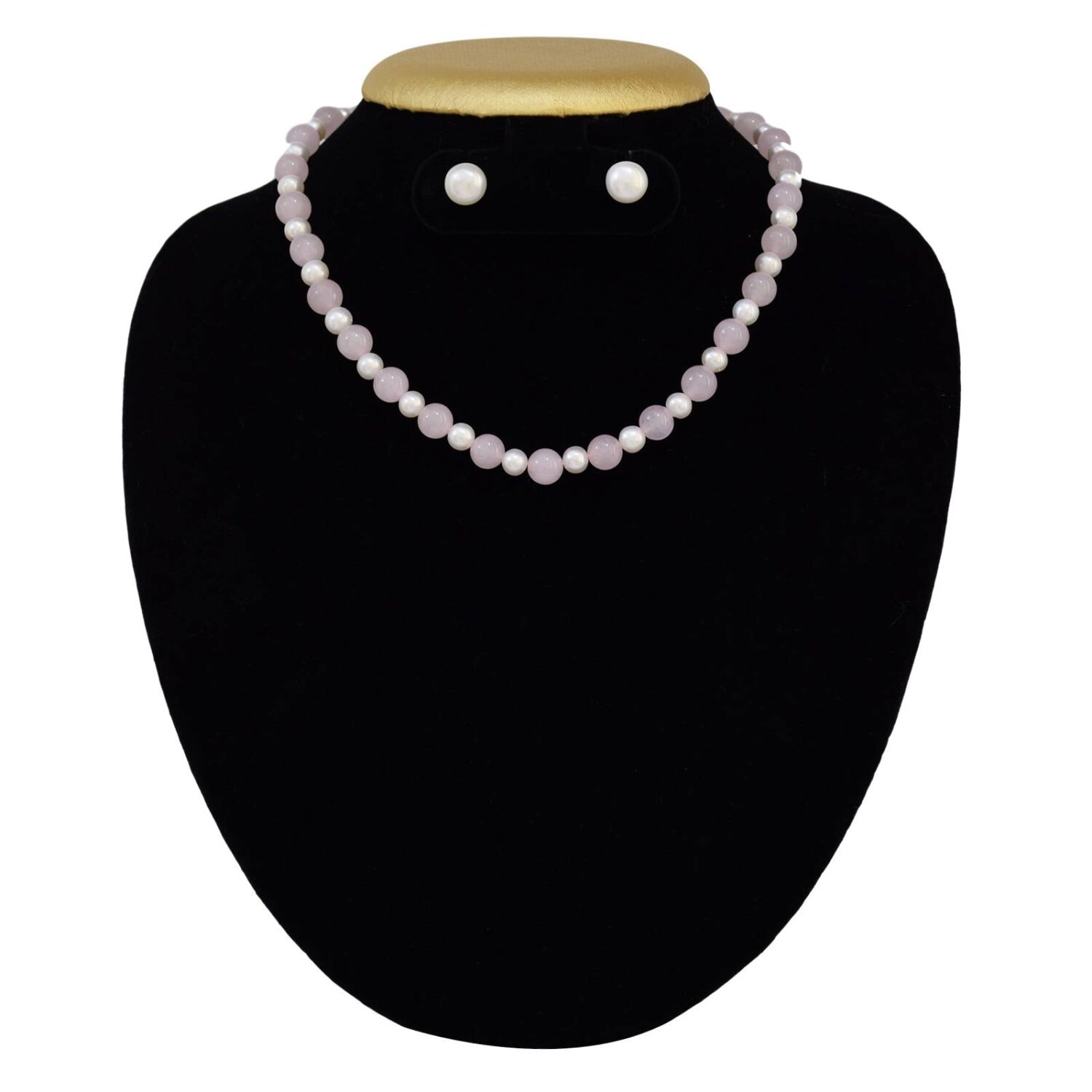
Trendy Pearl Necklace in Pearls and Rose Quartz
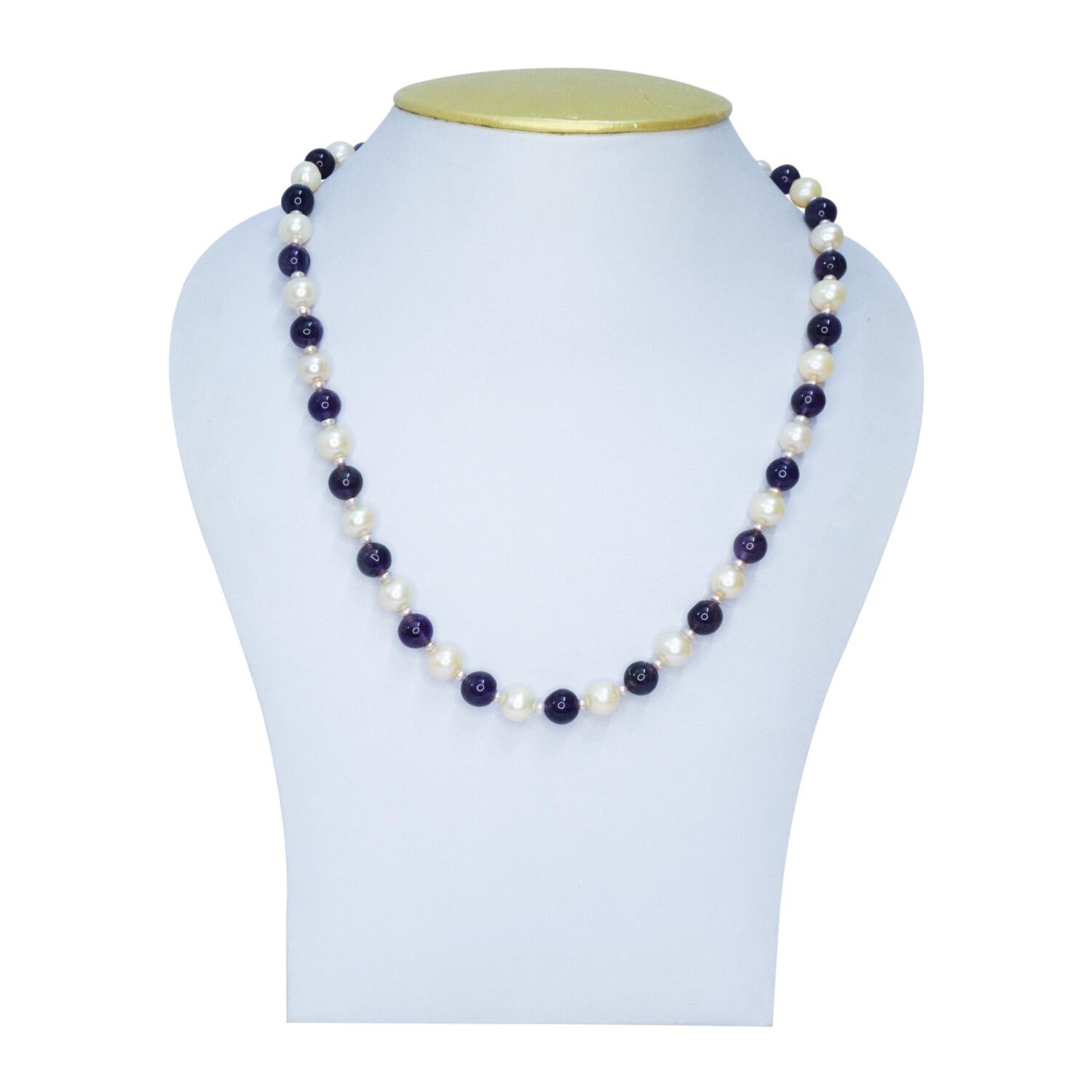
Dainty Peach Pearls With Purple Garnet Beads Necklace
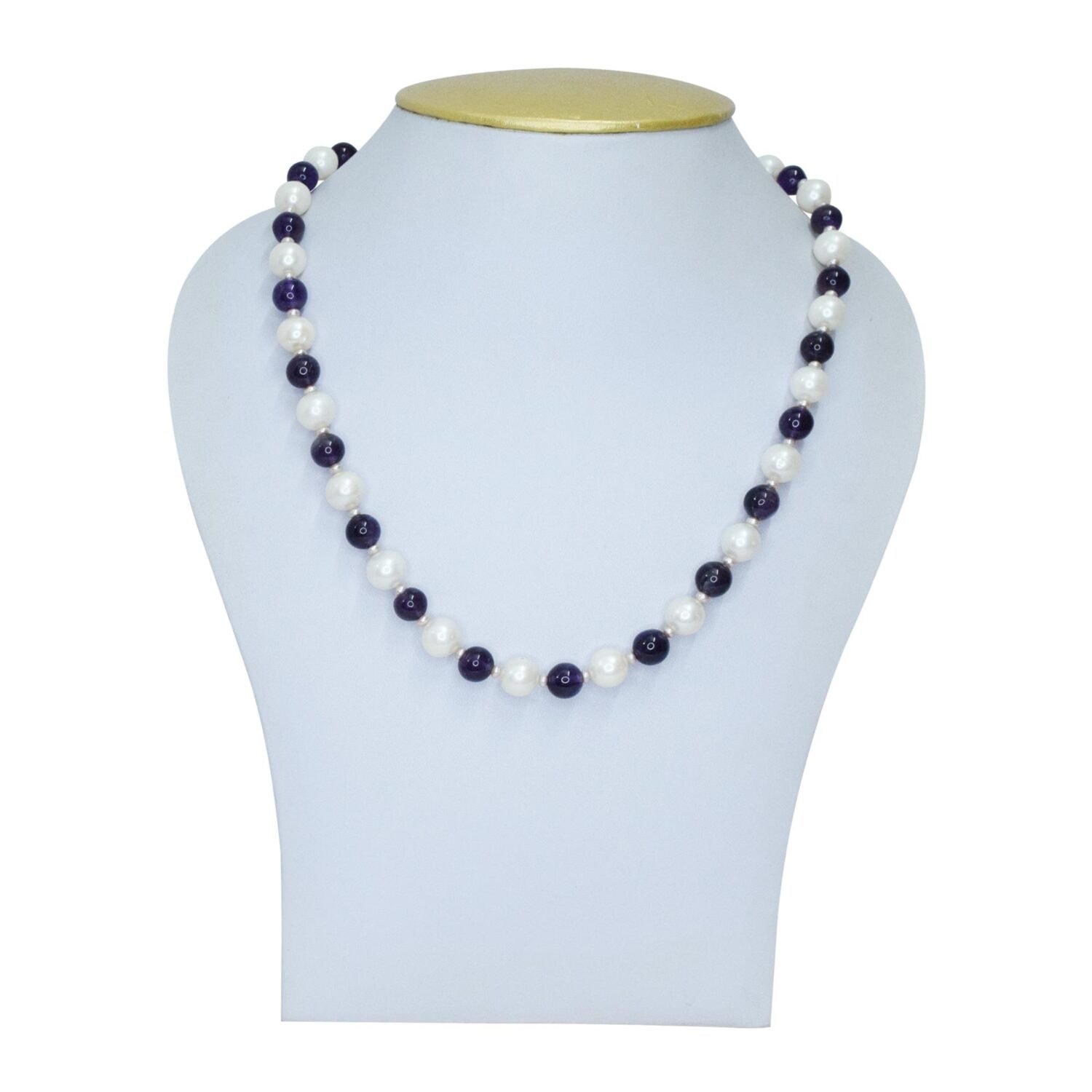
Radiant 19 Inches White Pearls Necklace With SP Purple Garnet Beads
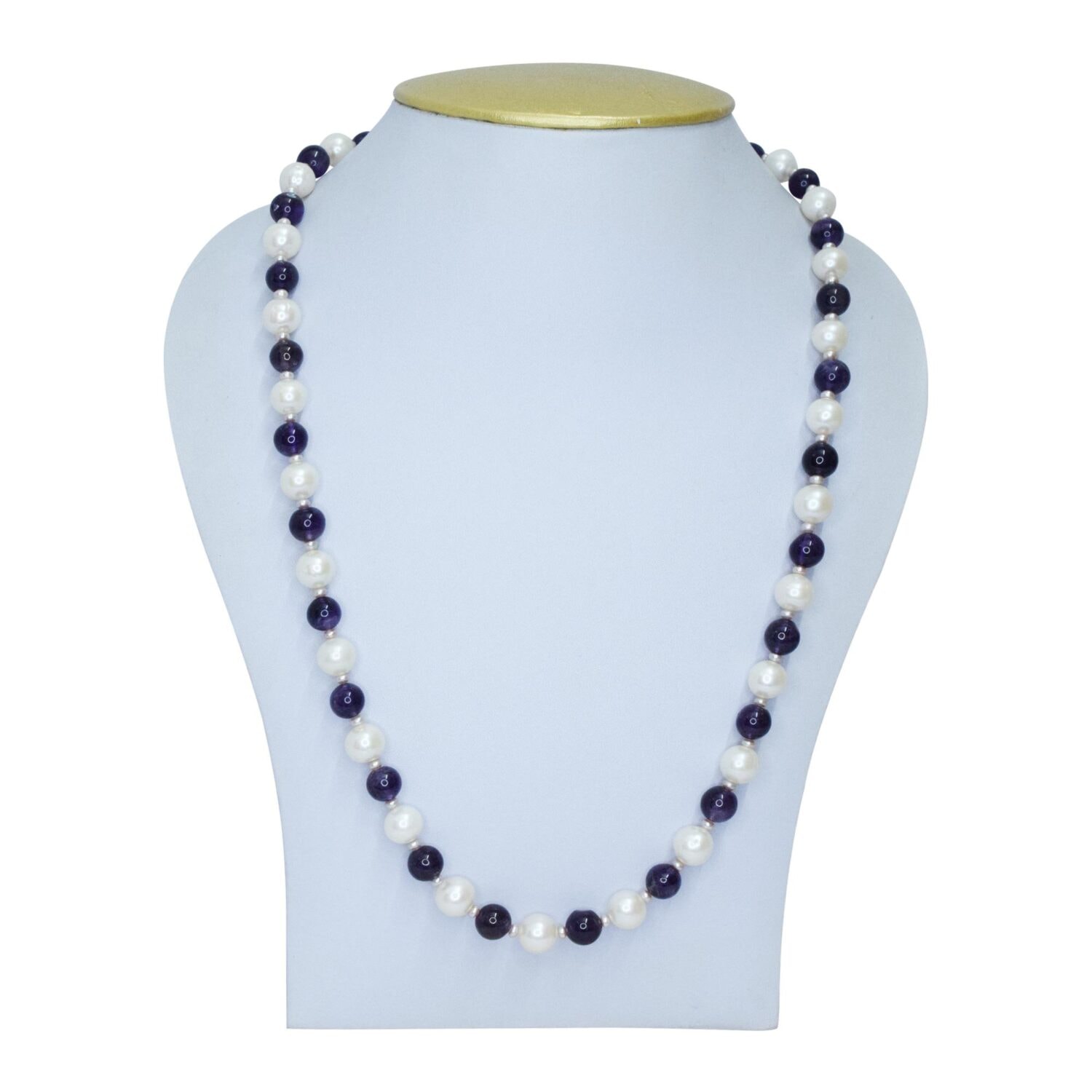
Luxurious 23 Inches White Pearls With Purple Garnet Beads Necklace
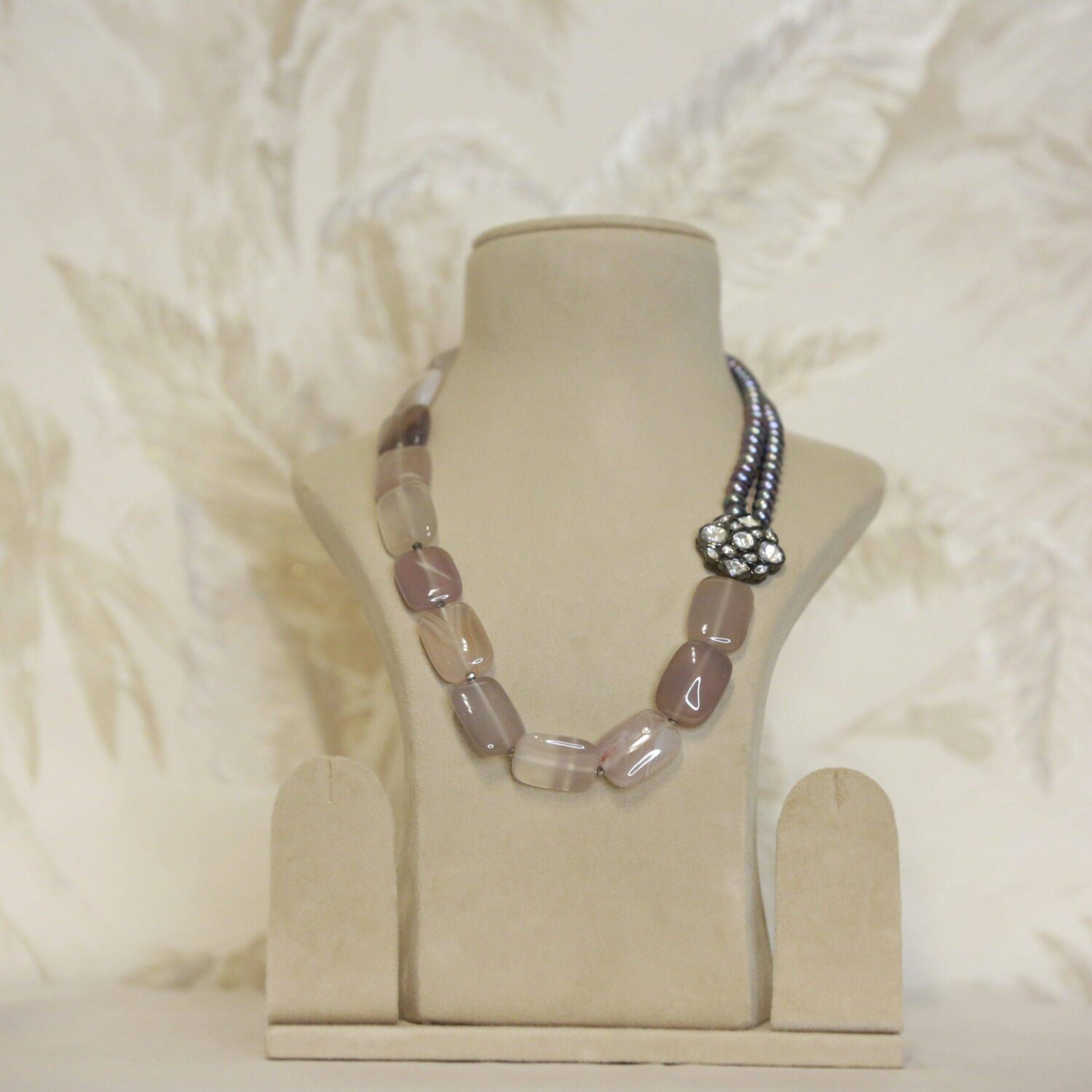
Striking Blue Pearl Necklace With Oxidized Polki Pendant & Grey Onyx
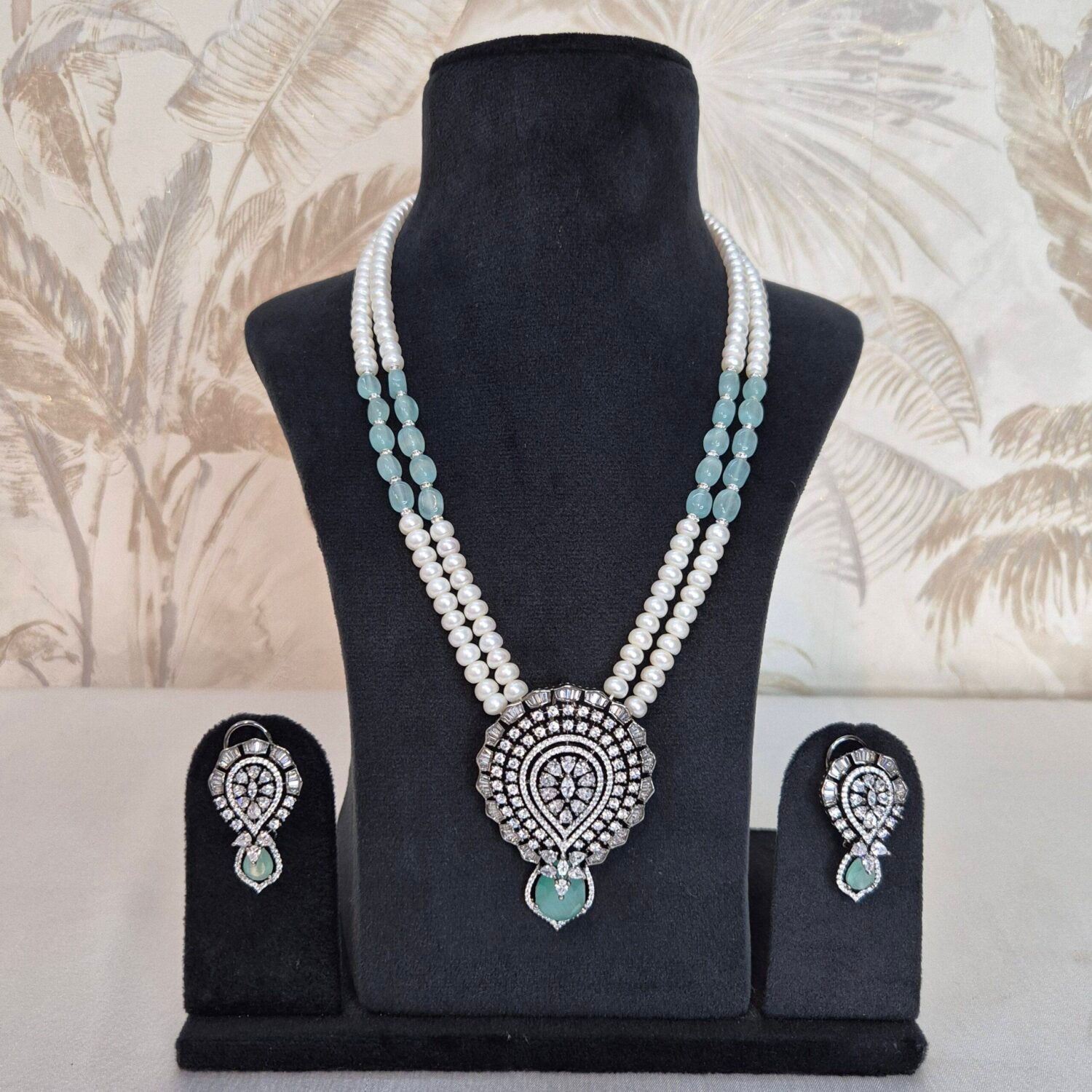
Spectacular 6mm White Semi-Round Pearls 19Inch Necklace With Victorian Pendant
Gemstone
Any mineral or organic material cut for jewellery. Traditionally split into precious (diamond, ruby, sapphire, emerald) and semi-precious.
Turquoise
An opaque blue to green stone, soft and porous. Called firoza in India and worn for Jupiter in astrology.
Onyx
A black chalcedony, usually dyed to an even colour. Common as a contrast bead beside white pearls.
Coral
A red to orange organic gem formed from marine coral skeleton. Paired with pearls in traditional Indian sets, and worn as moonga in astrology.