


Brass
A copper and zinc alloy with a warm gold tone. Strong and inexpensive, but it tarnishes and can react with skin.
Brass takes fine detail well and is the traditional base for much Indian costume jewellery.
Its copper content is what makes it react. On some people it leaves a temporary green mark, which is a harmless reaction between skin acids and copper.
A lacquer or plating layer prevents this, and re-lacquering is a normal part of maintaining a brass piece.
When you are buying
If a brass piece leaves marks on your skin, a clear lacquer coat solves it permanently and costs very little. Do not assume the piece is faulty.
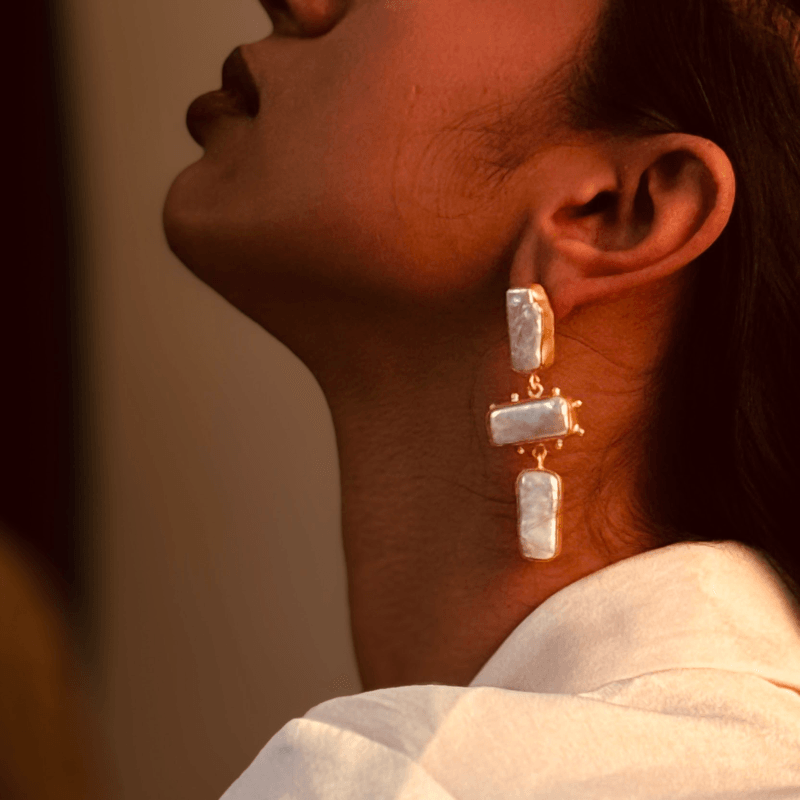
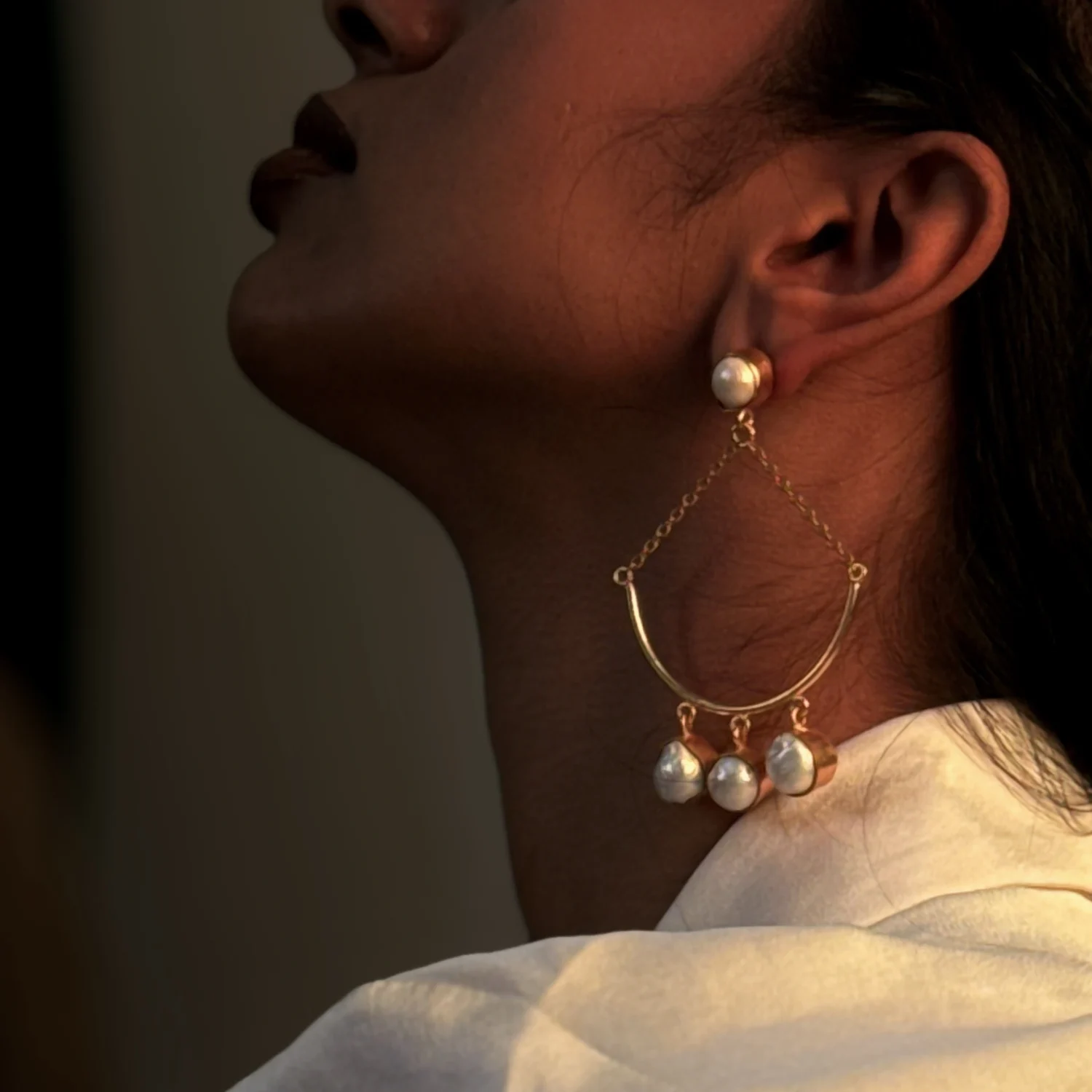
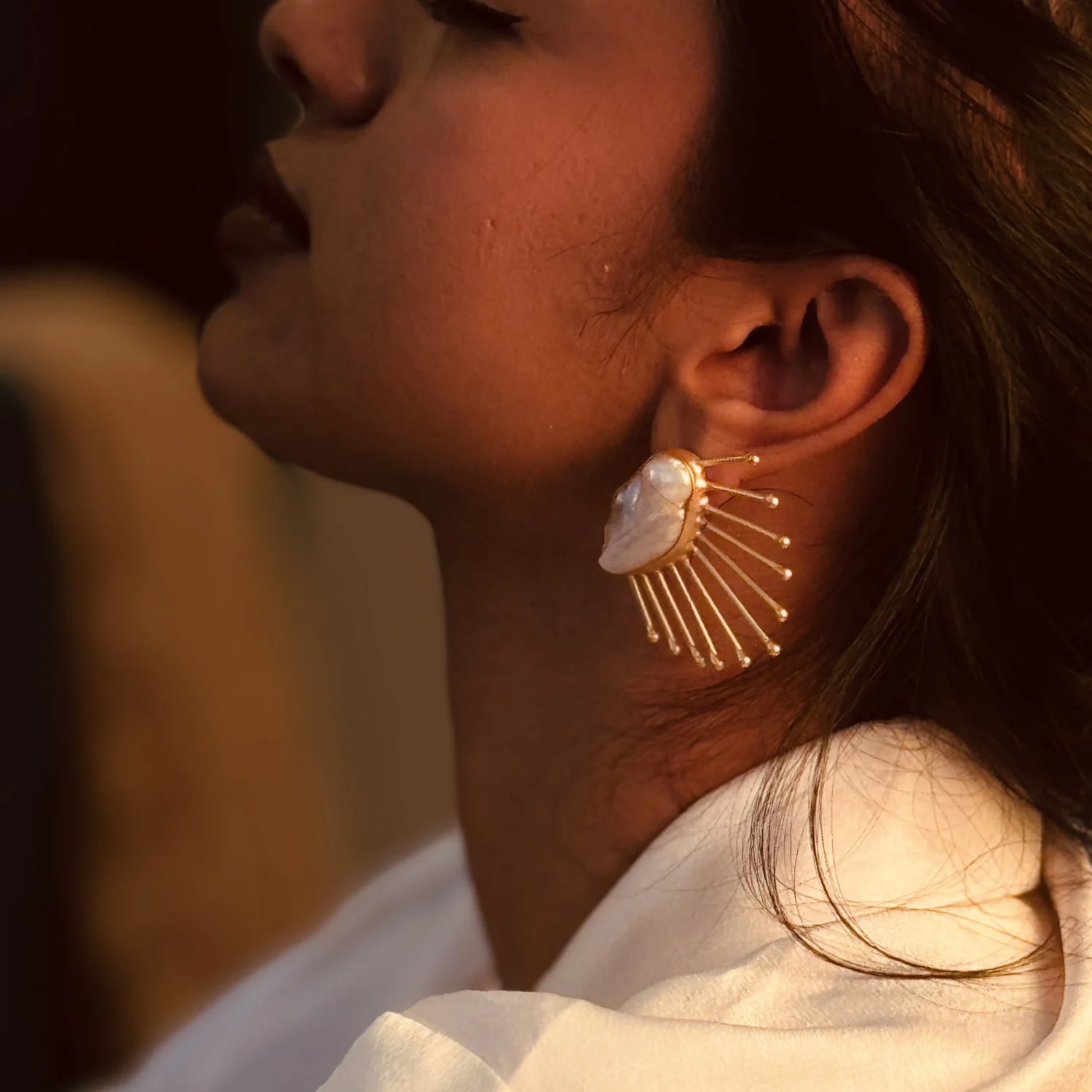
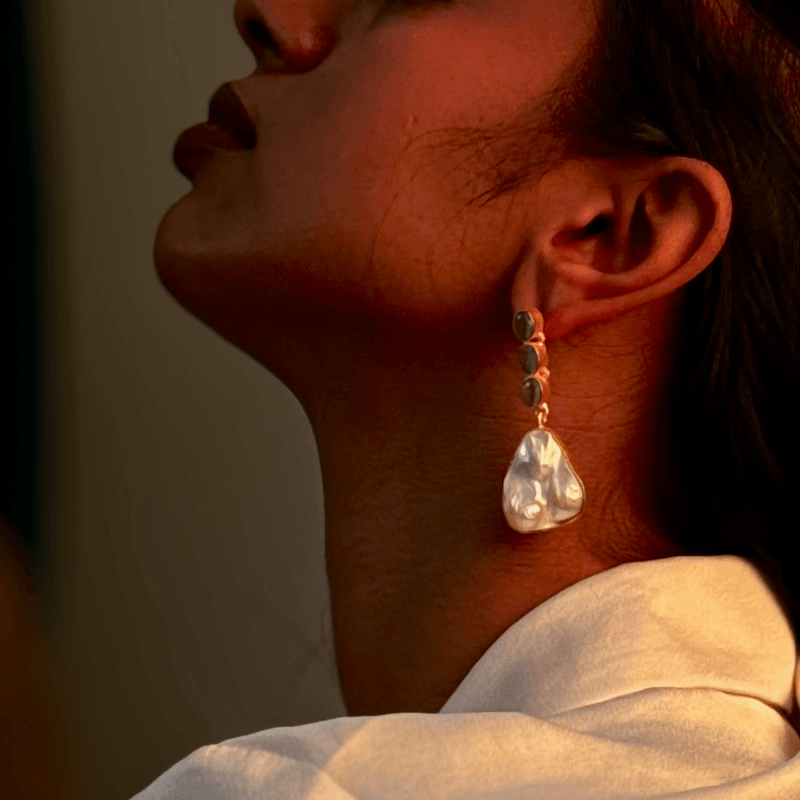
Brass and pearl pieces
A few from the collection, from ₹3,000.
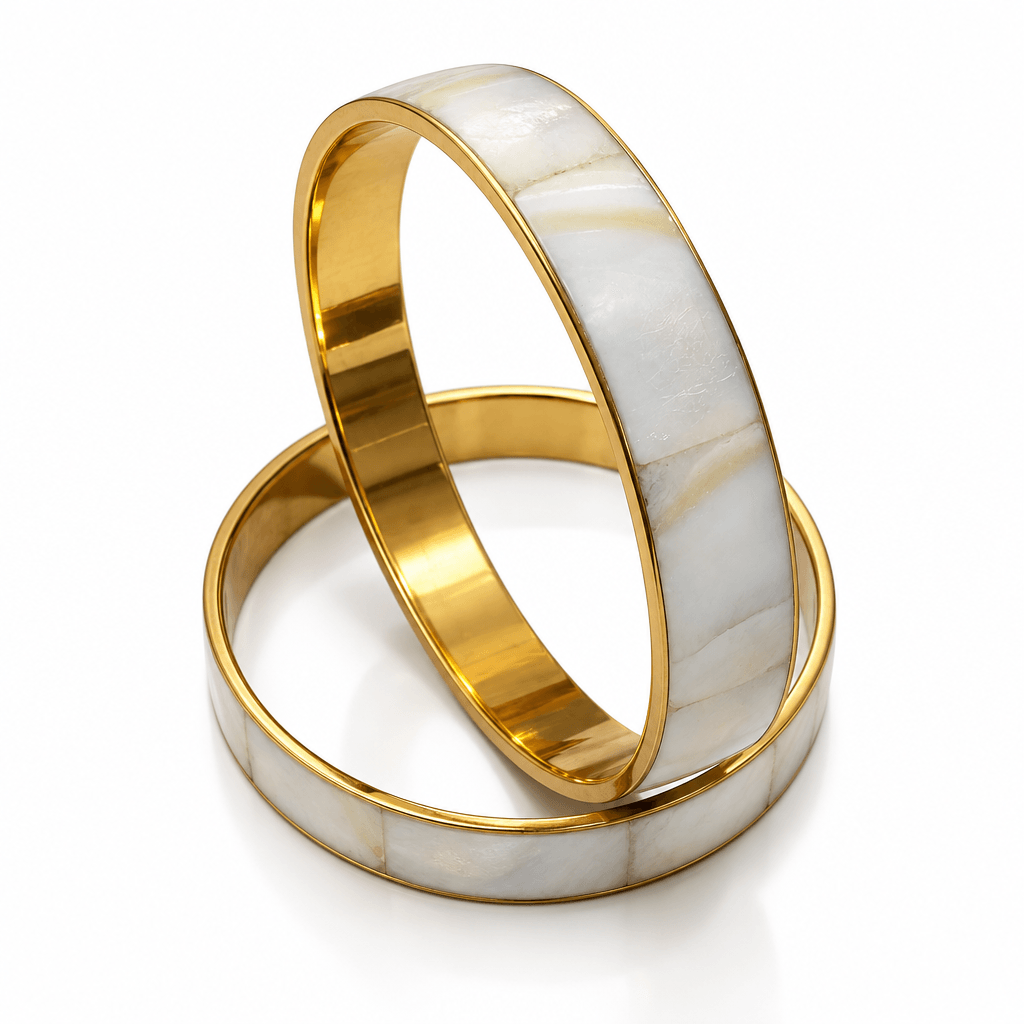
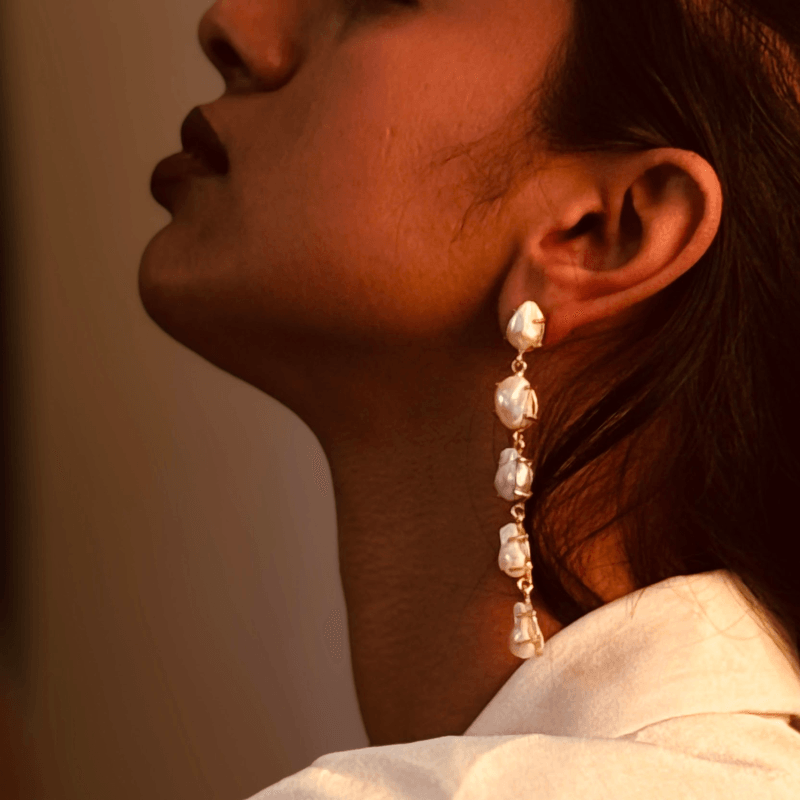
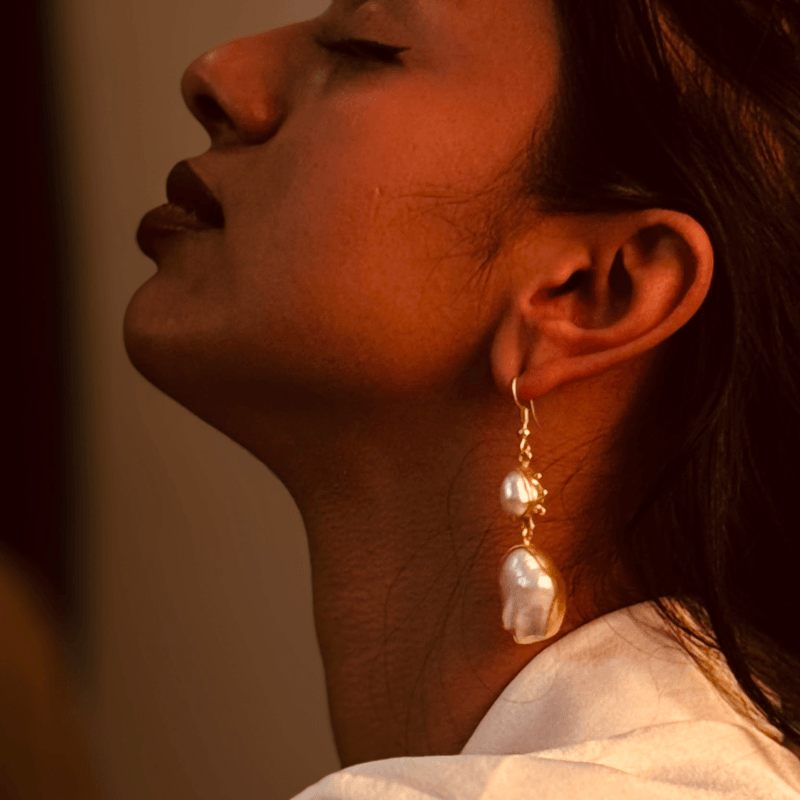
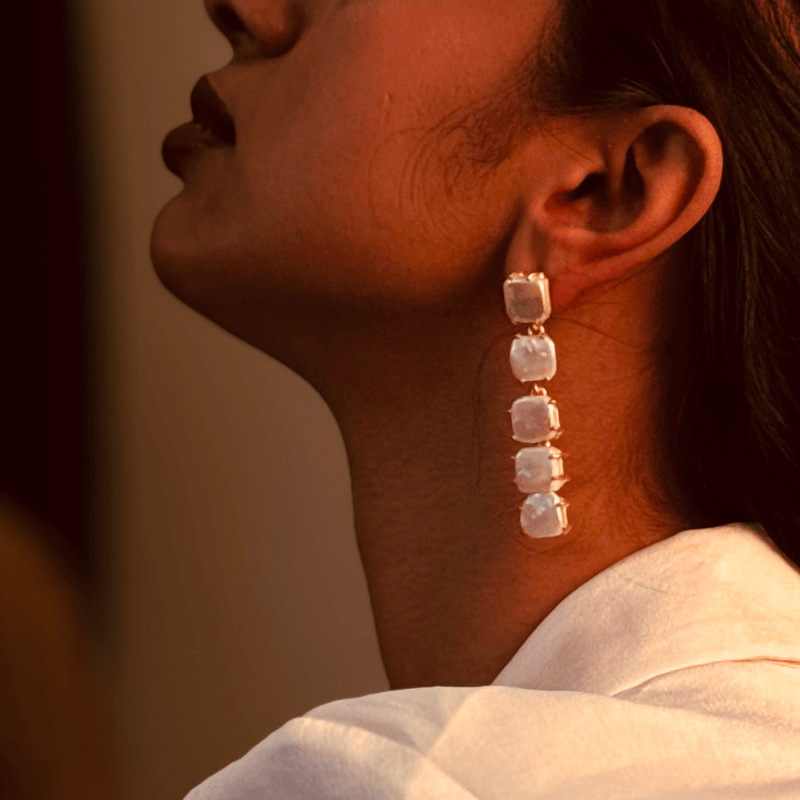
Korean Metal
A light, corrosion-resistant alloy widely used for fashion jewellery findings. Holds plating well and does not rust.
Gold Plating
A thin layer of gold deposited over a base metal. Gives the colour of gold at a fraction of the cost, and wears off over time.
Hypoallergenic
Metal unlikely to cause a skin reaction. In practice it means nickel-free, since nickel causes most jewellery allergies.
925 Sterling Silver
An alloy of 92.5% silver with 7.5% other metals, usually copper. The international standard for silver jewellery.